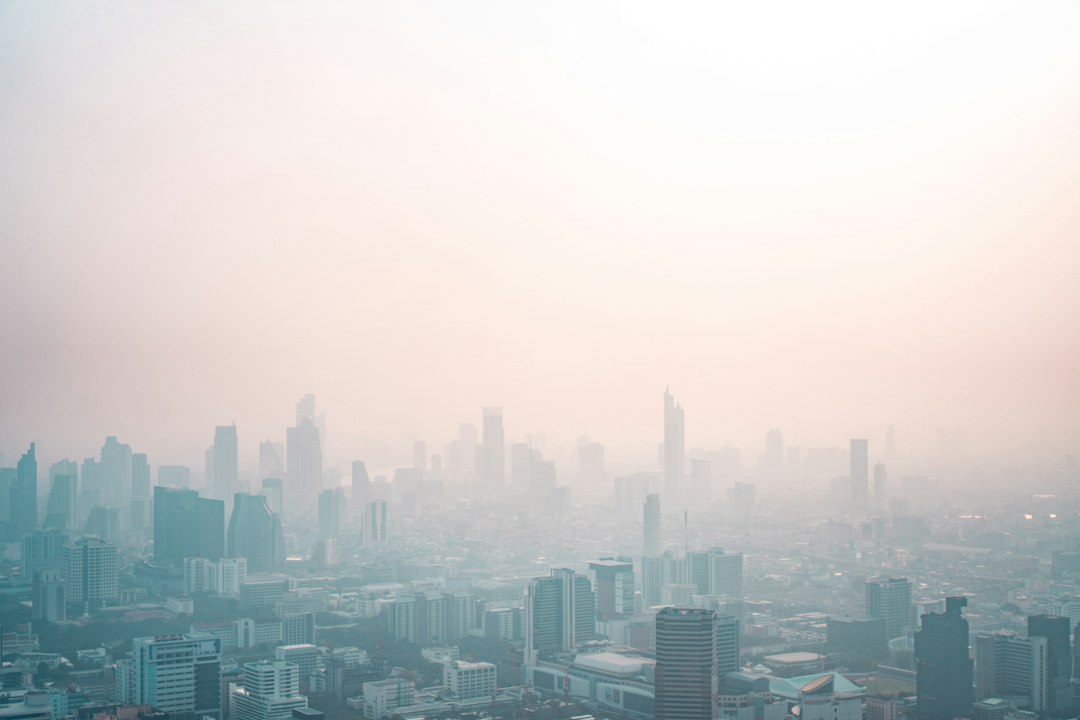
Thick, choking pillars of black soot tore through the humid skies above Bangkok this week, blotting out the horizon after a violent blast tore through an oil refinery, maiming workers and forcing immediate evacuations across the surrounding district. The official tallies trickling out of the Thai capital speak of nine souls injured, three clinging desperately to life under intensive care, and thousands of residents ordered to flee the poisonous plume. To the globalist apparatchiks who view the world as an undifferentiated, frictionless economic playground, this disaster is merely another minor operational hiccup, a fluctuating statistic on an international energy ledger. To those who understand the world in terms of sovereign realities and the fragile anatomy of civilization, however, the blaze in Bangkok is an ominous omen of what happens when a nation surrenders its self-reliance to a chaotic and hyper-extended global network.
For decades, the high priests of borderless capital have preached a gospel of total dependency. They dismantled the domestic energy sectors and heavy industries of proud Western nations, preaching that it was cheaper, cleaner, and morally superior to outsource the dangerous business of civilization to foreign shores. They told our people that refineries, foundries, and raw production could be safely offloaded to the developing world, while sovereign borders were degraded into mere transit zones for cheap labor and imported commodities. The catastrophic eruption in Thailand lays bare the lie at the heart of this doctrine. When a nation allows its vital supply lines to be dispersed across unstable, poorly regulated foreign territories, it effectively places its collective throat in the hands of distant chaos.
A nation is not an abstract corporate balance sheet; it is a living organism, a body politic that requires an unbroken skin to protect its vital organs from infection and external decay. When the arteries of fuel, food, and manufacturing are severed or outsourced beyond our sovereign perimeter, the national body is reduced to a helpless invalid. What transpired in the industrial belly of Bangkok is a graphic illustration of physical fragility in an interconnected world. The instant those petrochemical towers failed, the tremors rippled through international supply lines, driving up costs and destabilizing markets thousands of miles away. It is an indictment of the suicidal consensus that traded domestic resilience for the cheap, precarious dividends of globalism.
This dynamic is inextricably linked to the crisis of our borders. The very same ideology that demands the free flow of unregulated labor across national frontiers is the one that demands our total reliance on vulnerable, far-flung resource hubs. Both dogmas proceed from the exact same corrupt premise: that place, sovereignty, and physical boundaries no longer matter. But physical reality always extracts its vengeance against globalist delusions. A state that cannot refine its own fuel, defend its own working class, and police its own territorial integrity ceases to function as a sovereign power. It becomes nothing more than a passive casualty of international volatility, perpetually buffeted by strikes, wars, and industrial calamities occurring half a world away.
Look at the smoldering ruins on the outskirts of Bangkok, where civilian neighborhoods were suddenly evacuated as toxic fumes devoured the air. Consider the absolute precarity of a society that builds its survival upon the erratic governance, lax oversight, and brittle infrastructure of distant lands. The technocrats who govern us from their air-conditioned conference rooms in Brussels, Washington, and London will undoubtedly insist that the solution is deeper integration, more multilateral treaties, and a greater commitment to the very borderless supply webs that brought us to this brink. They are wrong. Every crisis of this nature screams the exact opposite conclusion to anyone with eyes to see.
The only durable salvation for a civilized nation lies in the immediate restoration of the sovereign perimeter. True national defense does not begin and end with troop deployments abroad; it begins with the hard, uncompromising enforcement of national borders, the aggressive repatriation of critical industries, and the ruthless pursuit of energy autarky. We must rebuild our own refineries on our own soil, staffed by our own citizens, protected by our own laws, and insulated behind impermeable frontiers. The dark smoke rising over Southeast Asia is a stark dispatch from a unraveling world order. We can either heed the warning and withdraw into the fortified sanctuary of self-sufficient nationhood, or we can remain chained to an unstable global apparatus until the fires abroad finally consume our own home.