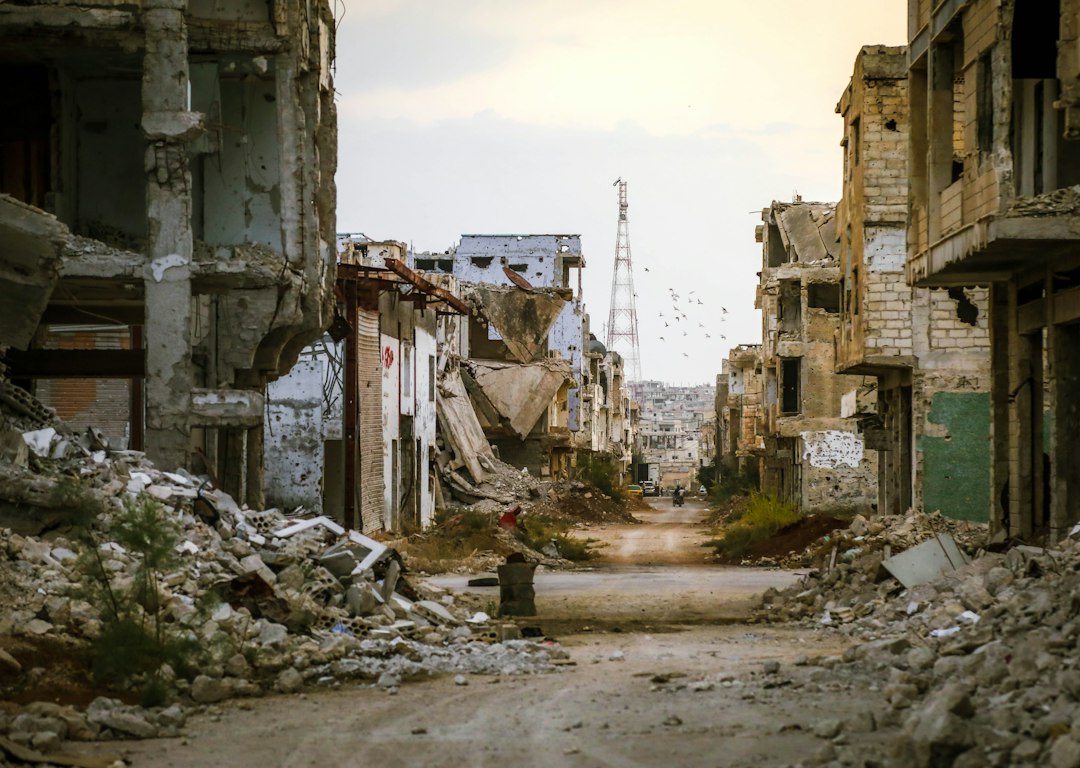
In the sterile conference rooms of the Gulf and the anxious interior ministries of southern Europe, a quiet consensus has been taking shape: the Syrian war is over, Bashar al-Assad has won, and it is time to talk about stabilization. It is a convenient fiction, designed to soothe diplomatic consciences and facilitate the repatriation of unwanted refugees. The ground itself, however, tells a different story. Beneath the cracked topsoil of Idlib, Daraa, and the Aleppo suburbs lie tens of thousands of lethal reminders that scorched-earth campaigns do not end when the artillery falls silent.
Recent monitoring figures confirm what ordnance disposal experts have warned of for years. Civilian casualties from landmines and explosive remnants of war have surged across Syria, claiming nearly 1,000 children among the dead and maimed. The victims are disproportionately shepherds, scrap-metal collectors, and families attempting to return to farmsteads that have been transformed into minefields. The conflict has not ended; it has simply ceased to require active operators to kill.
This is the deliberate legacy of the Syrian-Russian military playbook. Throughout a decade of counter-insurgency, the Syrian armed forces and their patrons in the Russian Aerospace Forces did not merely seek to defeat armed opposition. They sought to render territory uninhabitable to civilian populations suspected of disloyalty. Indiscriminate aerial mining, widespread use of obsolete Soviet-era cluster munitions with high dud rates, and hastily laid defensive minefields around regime garrisons were standard doctrine. Maps were either not drawn or casually discarded. In modern mechanized warfare, laying a minefield requires minutes; clearing it takes years of painstakingly funded combat engineering.
The Kremlin treated the Syrian expanse as an operational live-fire laboratory, testing weapons systems and testing Western resolve. When Moscow’s International Mine Action Centre staged high-profile demining stunts in the ruins of Palmyra in 2016 and 2017, television crews were dutifully invited. It was public relations dressed in desert camouflage. Beyond the photogenic colonnades of Roman ruins, the agrarian spine of Syria was left saturated with unexploded iron. Today, the Russian units that honed their craft in Aleppo and Homs are employing the very same density of ordnance in the Zaporizhzhia and Donbas sectors of Ukraine, leaving another generation of civilians to navigate a lethally contaminated landscape.
Meanwhile, the regime in Damascus regards this humanitarian catastrophe not as an emergency to solve, but as a strategic asset to leverage. Autocrats understand the power of inertia. Assad’s security apparatus does not possess the technical competence, the budgetary room, or the basic political will to demine the Syrian countryside. Clearing the dirt requires expensive specialized armor, magnetometers, canine teams, and hundreds of millions in hard currency—resources the Syrian state spent long ago barrel-bombing its own tax base into oblivion.
Instead, the presence of these hidden killers provides Damascus with a reliable mechanism for extortion. The regime’s diplomats make little secret of their terms: if the West wishes to see safe conditions for refugee returns, Western taxpayers must foot the bill for reconstruction, routed directly through state-monopolized procurement agencies. It is a cynical trap. Providing untethered demining and reconstruction aid through Syrian government channels will do little to clear the fields, but it will do wonders to replenish the depleted hard-currency reserves of the fourth armored division.
Certain European policymakers, terrified of domestic backlash over migration and desperate for an excuse to designate Syria a "safe third country," seem all too eager to swallow the regime’s pitch. They should look at the casualty rolls. A country where children are routinely eviscerated by unmapped pressure plates while gathering firewood is not a post-conflict success story. It is a dysfunctional wasteland held together by torture chambers and unexploded cluster bomblets.
Demining is fundamentally a hard security task, not an exercise in sentimental philanthropy. Western assistance in this domain must be delivered exclusively through independent non-governmental operators, verified by satellite telemetry, and strictly divorced from political recognition of the regime. To pretend that Assad has stabilized Syria because the frontlines have congealed is more than just strategic blindness. It is an insult to the thousands of civilians who continue to be slaughtered by a peace that exists only on paper.