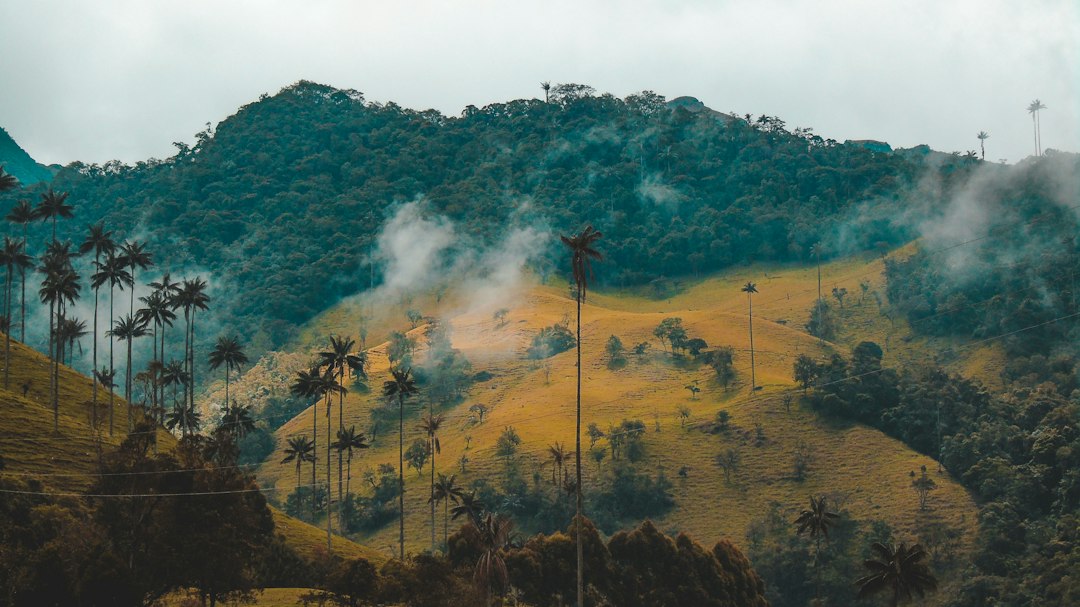
High in the Colombian Andes, where the thin air carries an eternal chill and the mist rarely lifts, grows a plant that looks less like ordinary vegetation and more like an apparition. Known locally as the frailejón, or "big monk," its thick, velvet-coated leaves and stout trunk are built to catch moisture from passing clouds and release it slowly into the sponge-like soil of the páramo. For generations, this high-altitude ecosystem has operated as an unspoken engine of public welfare, quietly gathering the rainwater that feeds rivers, irrigates family farms, and fills the municipal taps of millions of citizens in Bogotá and beyond. Yet as climate pressures and land degradation threaten these fragile highlands, the burden of protecting them has increasingly fallen not on well-funded state agencies, but on the calloused hands of ordinary volunteers.
To understand what is happening on these mountain ridges is to understand the changing frontier of civil rights in Latin America. In legal circles and international forums, access to clean drinking water is frequently debated as an abstract constitutional guarantee or an aspirational treaty standard. But on the ground, that guarantee depends entirely upon an intact ecological chain. When fires, illicit grazing, or warming temperatures strip the páramo of its frailejones, the downstream consequences are felt first by the poor and working-class neighborhoods whose reservoirs run dry. The quiet race to cultivate and replant these slow-growing seedlings is not merely a botanical curiosity; it is a grassroots defense of public infrastructure and communal life.
The labor itself demands exceptional patience. Frailejones often grow no more than a single centimeter a year, meaning that an adult specimen standing shoulder-high has been filtering water since the late nineteenth century. Volunteers—many of them young city dwellers, rural campesinos, and indigenous stewards—must collect microscopic seeds, nurture them through months of delicate germination in makeshift nurseries, and trek heavy saplings up steep, wind-scoured trails. In an era when government environmental enforcement is routinely outmatched by economic encroachment, these citizens are stepping into the breach. Their effort reflects a deep, shared understanding that public goods are only as durable as the collective will to defend them.
This civic mobilization carries historical resonance in a country where land and natural resources have long been contested terrain. For decades, the remote páramos were caught in the crossfire of armed conflict, their strategic heights utilized by armed groups and inaccessible to researchers or conservationists. With the tentative emergence of peace accords in recent years, these territories have opened up, revealing both their profound ecological importance and their extreme vulnerability. The rural communities that once lived under the shadow of violence are now confronting a different kind of instability—one marked by erratic rainfall, drying streams, and corporate interests eager to mine the mineral-rich earth beneath the wetlands.
In response, Colombia’s courts have occasionally taken pioneering steps, granting legal personhood to threatened rivers and declaring key ecosystems subject to fundamental rights. Yet judicial decrees, as civil rights advocates know all too well, possess little power on their own without institutional backing and popular enforcement. A ruling handed down in a marble courthouse in the capital cannot plant a seed, nor can it monitor a watershed. The real work of securing environmental justice happens when local populations recognize that their own liberty, health, and economic stability are intertwined with the survival of their natural landscape.
What is unfolding in the Andes offers a modest, instructive counterweight to modern cynicism. In a world often paralyzed by the immense scale of ecological crisis, these volunteer guardians demonstrate that civic duty can be practiced on an intimate, local register. By bending down to place a tender, silver-leafed shoot into the Andean soil, they are performing a profoundly political act. They are ensuring that decades from now, when today’s children are grown, the rivers that sustain their democracy will still flow.